 |
|
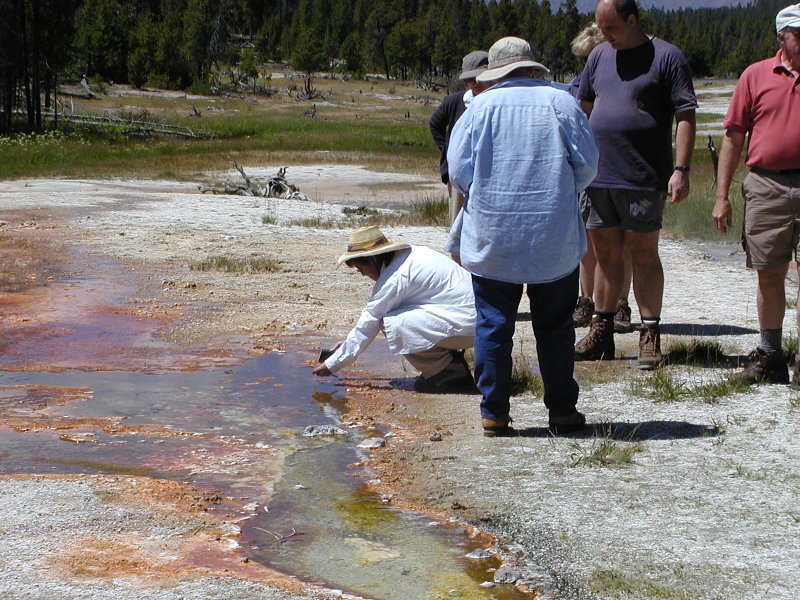
OCTOPUS SPRING - 3 - Sampling With permission from the National Park Service, Dr. Ward collected a small sample of an Octopus Spring microbial mat for us to use later in his laboratory. |
|
|
|
OCTOPUS SPRING - 3 - Sampling With permission from the National Park Service, Dr. Ward collected a small sample of an Octopus Spring microbial mat for us to use later in his laboratory. |
 |
|
 |
|
|
|
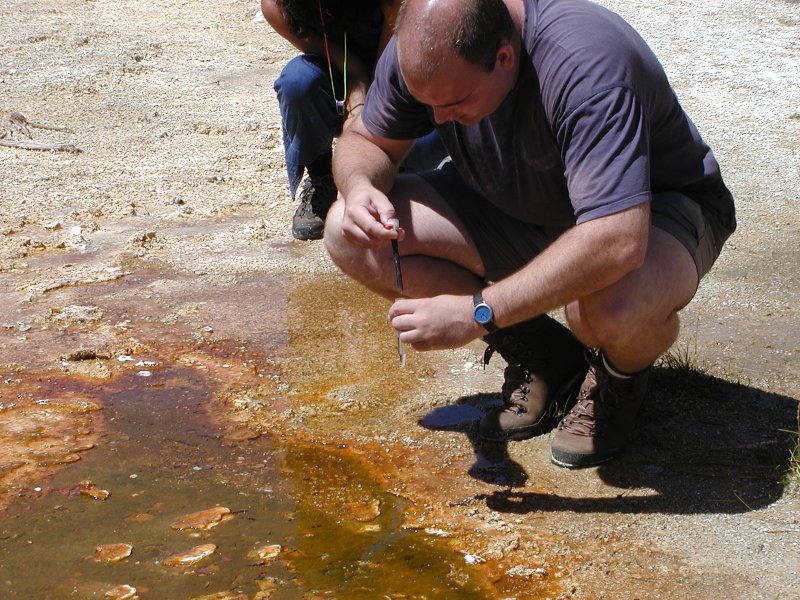
Maggie measures water temperature with her techie hand-held gadget, which measures how much thermal infrared light the water emits. In these wavelengths (> 5 micrometers) light emitted by objects (like hot water) is much brighter than sunlight. The temperature was 60°C. |
|
|
|
|
 |
|
 |
|
|
|
|
